
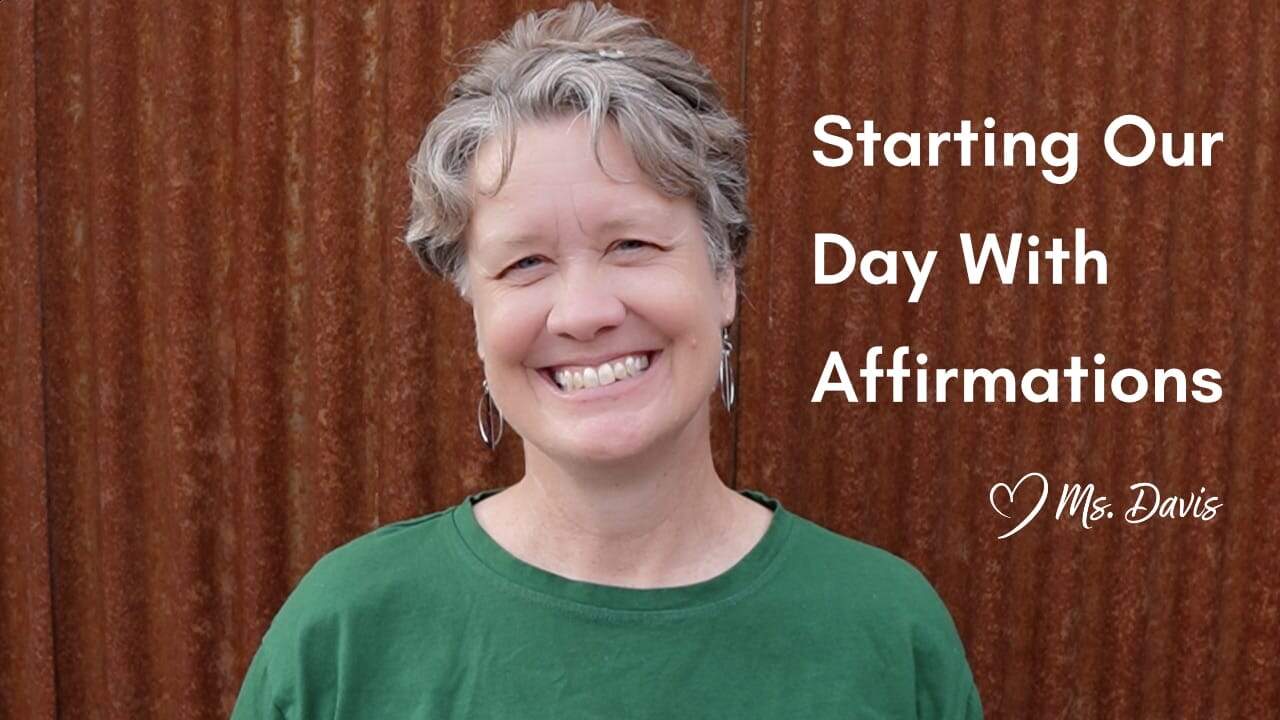
Creating a Classroom Culture of Kindness: Starting Our Day with Affirmations
Each morning in our classroom, we begin with a moment that helps us breathe, focus, and set the tone for the day: affirmations.
In a busy world, I believe it’s important to teach children that they are loved, worthy, and capable not just through our lessons, but through our daily habits and words. That’s why I’ve made affirmations an intentional and joyful part of our morning meeting routine.
Video and Transcript
Why Affirmations Matter in the Classroom
Affirmations are short, powerful statements we say aloud that help us focus on who we are and who we’re becoming. For young children, they are a tool that builds:
- Confidence
- Empathy
- Resilience
- Self-awareness
When students hear and repeat phrases like “I am kind,” “I can try again,” or “I treat others with respect,” they’re practicing positive self-talk and beginning to form their inner voice. And that voice matters.
Affirmations & the Brain
What we say to ourselves shapes how we think and feel. Neuroscience calls this neuroplasticity—our brain’s amazing ability to grow, change, and rewire based on what we experience and repeat. When we say kind things to ourselves and others, our brain strengthens those pathways.
That’s why I keep affirmations short, repeatable, and real—so that they’re not just something we say, but something we remember and carry with us.
What Our Morning Affirmations Sound Like
Each day, a student leader leads our affirmation or myself. The rest of us repeat it back, one line at a time. Here’s an example:
I am smart.
I am safe.
I am learning.
I am kind to others.
I am kind to myself.
Love, Ms. Davis
I often write new affirmations inspired by children’s books, authors, or something meaningful happening in our classroom. If a particular writer inspires an affirmation, I make sure to give them credit. Our words are rooted in gratitude.
Teaching Grace and Kindness
I always return to two big ideas: grace and kindness.
Grace means giving ourselves permission to make mistakes and try again. Kindness means treating others with respect even when it’s hard.
These two values guide our classroom community, and affirmations help us keep them close every day.
The Ripple Effect I’ve Seen
After using affirmations for several years, I’ve seen something truly beautiful happen:
Students begin creating their own affirmations—natural, encouraging phrases that help them feel brave or calm when they need it.
I’ll hear one child gently remind another, “You can do it—just try again,” or even say something like, “I believe in myself,” during a tricky moment.
These aren’t just routines—they’re tools for life. Kids learn that their words have power, and they use that power to lift each other up. That’s the kind of classroom culture I want to build.
Final Thoughts
Kids don’t need long speeches or perfect words. They need repetition, encouragement, and a safe space to believe in themselves.
If a child hears every day:
- “You matter,”
- “You are enough,”
- “You belong here,”
…it starts to become a part of who they are and builds community.
Morning affirmations are one way we build a loving, safe, and empowered classroom. And every time we end with “Love, Ms. Davis,” I mean it from my heart to theirs.
Want to Start Affirmations in Your Own Classroom?
I’m working on a downloadable set of affirmations you can use at home or school! Stay tuned for printables and student-led versions you can try with your own learners.