Mathematizing the ELA Block: Bringing Literacy and Math Together
As educators, we are always looking for meaningful ways to make the most of our instructional time. When math and literacy are treated as separate blocks, we can miss powerful opportunities for students to see how these skills naturally connect. That idea was at the heart of our presentation at the MEAD Conference.
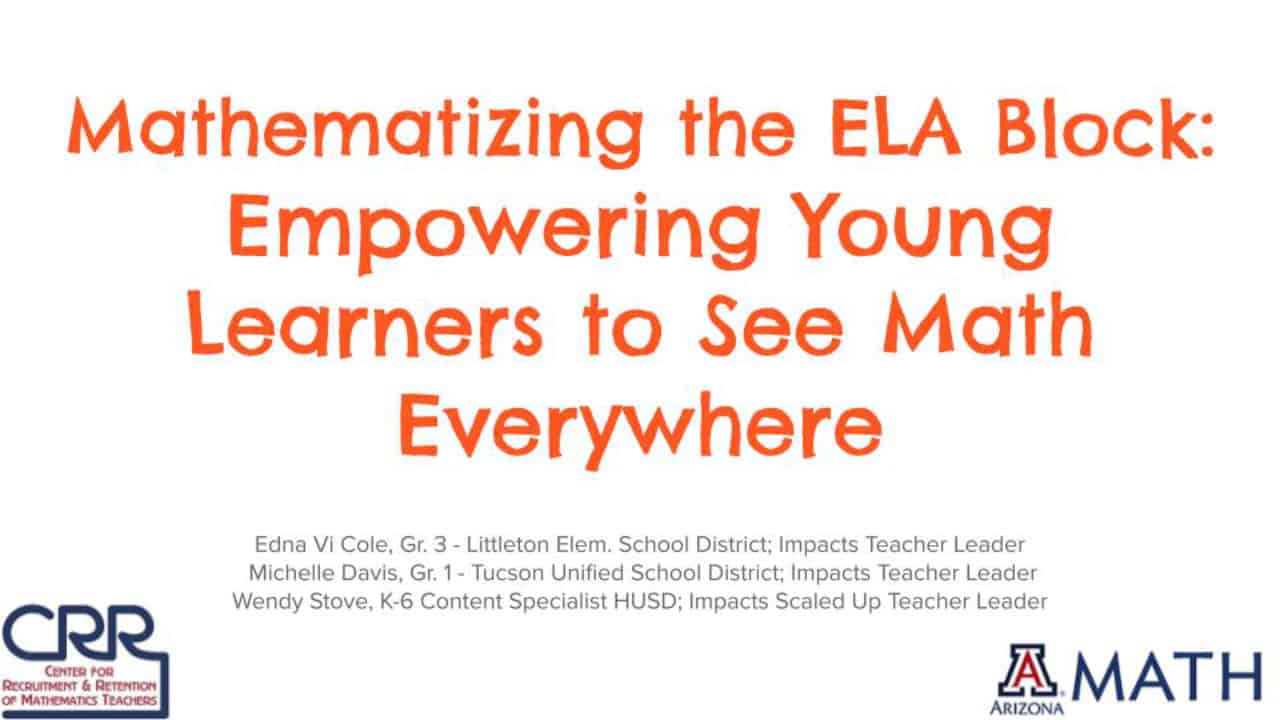
Presentation Description (MEAD 2026)
Discover how to integrate math thinking into your literacy block! In this K–3 workshop, teachers will explore strategies to mathematize phonics, writing, and read-alouds through counting, comparing, and problem solving. Engage students in rich discourse as they connect foundational literacy and numeracy, use decodable texts, and explore real-world tasks with mentor texts.
About the MEAD Conference and CRR
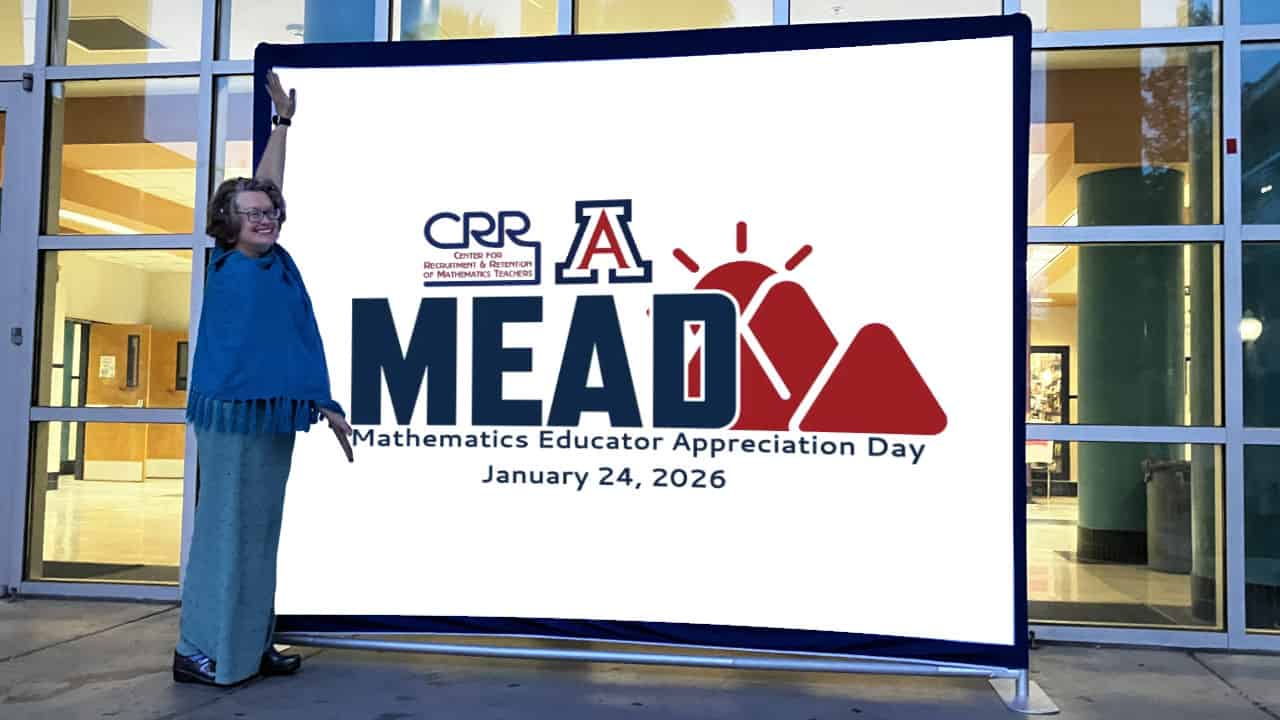
This presentation was developed in collaboration with Impact Teacher Leaders from the Center for Recruitment and Retention of Mathematics Teachers (CRR) at the University of Arizona, and was shared at the MEAD 2026 Conference. CRR’s work focuses on strengthening mathematics teaching through professional learning, collaboration, and leadership development, making it a natural home for conversations about integrating math meaningfully across content areas.
Collaboration Across Classrooms and Roles
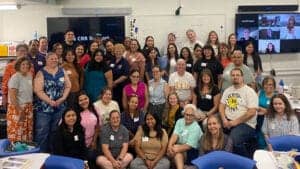
This work was a true collaboration. I partnered with fellow IMPACTS Teacher Leaders Edna Vi Cole, a Grade 3 teacher in the Littleton Elementary School District, and Wendy Stove, a K–6 Content Specialist with the Humboldt Unified School District and an IMPACTS Scaled Up Teacher Leader. I joined them as Michelle Davis, a Grade 1 teacher in the Tucson Unified School District and an IMPACTS Teacher Leader.
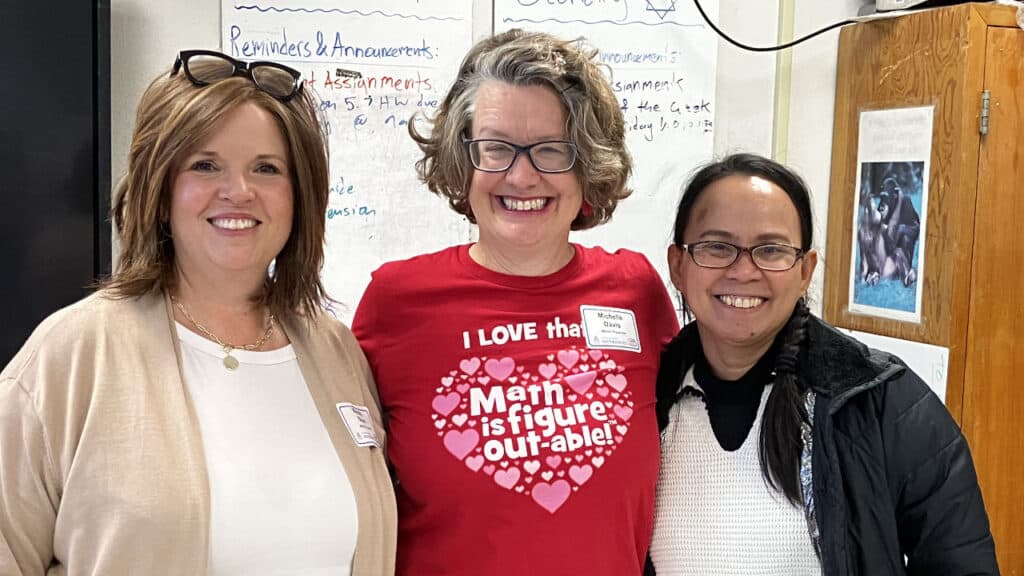
Together, we brought perspectives spanning kindergarten through third grade, along with district-level instructional leadership. This range of experience helped us design a format that was both practical for classrooms and grounded in strong instructional reasoning.
Designing a Practical and Purposeful Format
Our goal was simple but intentional: to help teachers recognize the natural intersections between literacy and math and to provide strategies that could be used immediately within the ELA block. Working on this presentation was a creative and energizing process. Rather than treating math as an add-on, we focused on showing how numeracy can live naturally within reading, writing, and phonics instruction.
We wanted teachers to leave the session not only inspired, but confident in their ability to integrate math thinking without adding more to an already full day.
Using Mentor Texts to Spark Math Thinking
A key element of our presentation was the use of mentor texts, books that naturally invite mathematical thinking. We selected Caps for Sale as our anchor text because it offers rich opportunities for counting, comparing, and problem solving in ways that feel authentic and engaging for young learners.
Using this familiar story, we demonstrated several natural entry points for mathematizing literacy instruction.
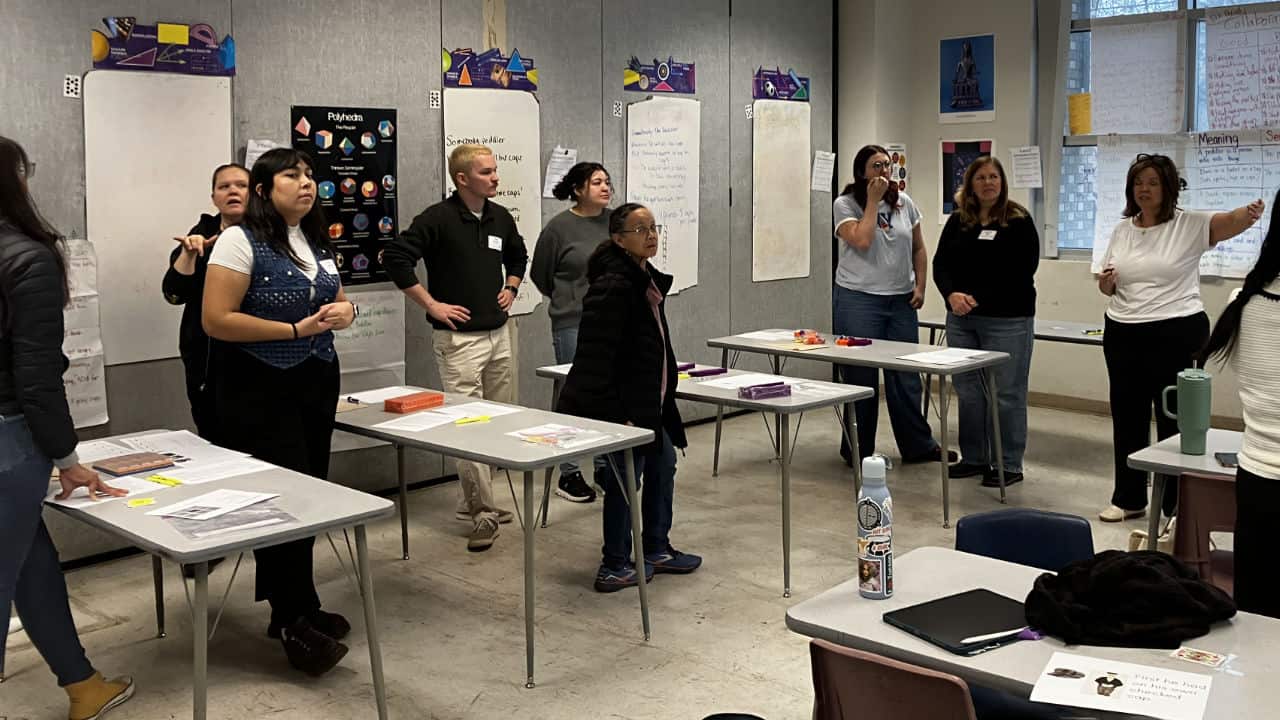
Decodable Readings
Students can practice phonics while also noticing patterns and quantities within the text. For example, they might count the number of caps, identify repeated sequences, or explore concepts such as more and less as they read.
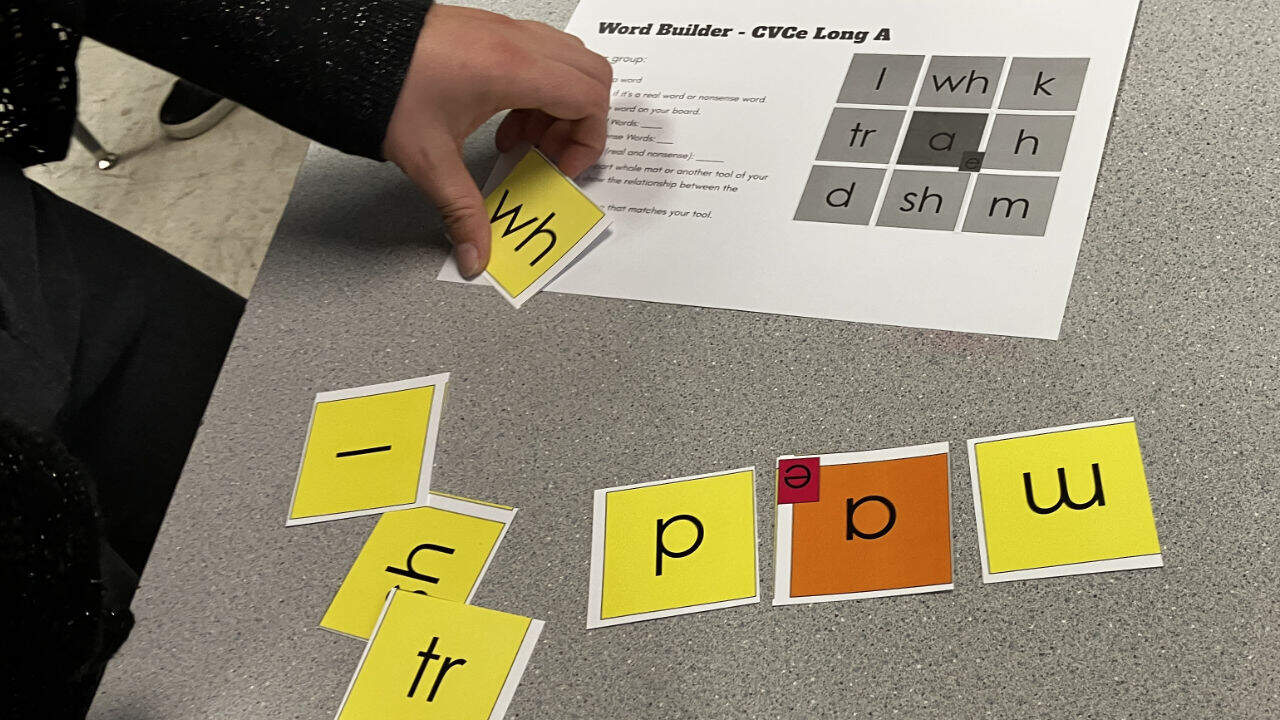
Phonics Activities
Sound-letter work can be paired with early math concepts through hands-on activities. Sorting caps by color or shape, or matching written words to quantities, reinforces both literacy development and numeracy in meaningful ways.
Story Retelling
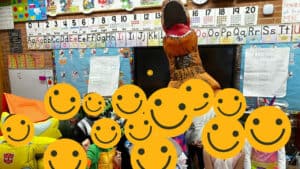
Retelling the story creates an authentic context for exploring math ideas such as addition, subtraction, and sequencing. As students act out the peddler’s dilemma, they can ask and answer questions like, “How many caps are left?” or “How many monkeys are in the tree?”
Seeing Math as a Way of Thinking
Throughout the presentation, we emphasized that math is more than numbers on a page. It is a way of thinking and reasoning that students can practice through stories, discussion, and play. By intentionally connecting literacy and numeracy, teachers can create rich learning experiences that deepen understanding across content areas without adding extra instructional time.
The Power of Collaboration
This experience reinforced the power of collaboration. Working across grade levels and roles allowed us to combine our strengths in literacy, numeracy, and student engagement into a cohesive and practical workshop. Our hope is that teachers walked away seeing every ELA block as an opportunity to strengthen both reading and math understanding, helping students truly see math everywhere.
A Window Into the Work Behind the Classroom
I’m sharing this on my blog to give parents a window into some of the “extra” work I do for my students. They don’t just learn from these ideas—they get to be part of the brainstorming and exploration process themselves. Seeing them engage with math through stories, phonics, and retelling helps me refine my teaching and better understand how young learners think. Experiences like these not only make learning more meaningful for students but also make me a stronger, more thoughtful teacher.